The Hidden Importance of the Back Side of Your Certificate During Attestation
When people prepare their educational, personal, or professional documents for international use, they usually focus on the front side of the certificate. The name, qualification, institution, date, registration number, and official seal are carefully checked. However, there is another part of the document that can be equally important—the back side of your certificate.
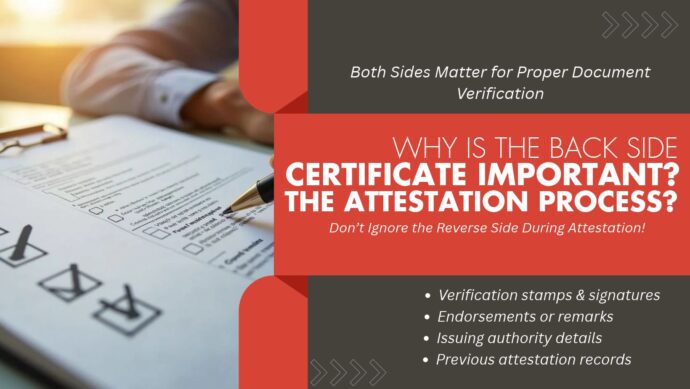
During the attestation process, the reverse side may contain stamps, signatures, verification notes, endorsements, serial numbers, or other details added by an authority. Ignoring this information can create unnecessary delays or complications. Understanding why the back side matters can help applicants prepare their documents correctly before submitting them for attestation.
Why Is the Back Side of a Certificate Important?
A certificate is not always considered only by what is printed on its front page. Depending on the issuing institution and the document type, important authentication details may be placed on the reverse side.
For example, the back of a degree or educational certificate may contain a university verification stamp, registrar’s signature, authentication seal, correction note, or other official endorsement. These markings can provide additional information about the document’s history and authenticity.
When a document moves through different stages of authentication, authorities may need to inspect the complete certificate rather than only the visible front page.
Stamps and Signatures Can Appear on the Reverse
One of the most common reasons the back side should not be ignored is the presence of official stamps and signatures. Some institutions place verification marks on the reverse instead of the front. These may confirm that the certificate has been checked against institutional records. If such information is covered, damaged, removed, or overlooked, the document may require additional verification.
Applicants should therefore avoid attaching unnecessary stickers, labels, or laminations to the back of a certificate before checking the requirements for their destination country.
Endorsements May Provide Important Information
An endorsement is an official note or marking added to a document by an authorized institution. It can sometimes indicate that a certificate has been verified, corrected, reissued, or authenticated.
These details may look insignificant to someone unfamiliar with document processing, but they can become relevant when the certificate is reviewed by another authority.
This is particularly important for people using documents for employment, higher education, immigration, family-related procedures, or professional registration abroad.
Why Applicants Should Not Alter the Reverse Side
A common mistake is to modify or conceal information on the back of a certificate. Cutting, removing, covering, or damaging an official stamp can affect how the document is examined.
Even if the front side looks completely genuine, inconsistencies on the reverse may raise questions during verification. Before sending a document for attestation, it is better to keep the certificate in its original condition. If there is writing or a stamp on the back that you do not understand, professional guidance can help you determine whether it needs special attention.
The Back Side Can Affect the Attestation Process
Attestation is a document authentication process in which certificates may pass through different authorities depending on the document type and destination country. Each stage has its own requirements, and the condition of the complete document can matter.
This is why applicants looking for Attestation Services In Hyderabad should check whether their documents need to be submitted exactly as issued. A professional service provider can examine both sides of the certificate and identify visible issues before processing begins.
Similarly, people searching for Attestation Services In Bangalore may benefit from having their documents reviewed before submission. A small detail on the reverse side can sometimes prevent avoidable delays later in the process.
What Should You Check on the Back?
Before submitting a certificate for attestation, carefully inspect both sides. Look for:
- Official stamps and seals
- Signatures of authorized officials
- Verification remarks
- Registration or reference numbers
- Endorsements or authentication notes
- Corrections or amendments
- Additional pages or attached sections
- Damage, tearing, or unclear printing
Do not assume that an apparently blank back side has no importance either. Requirements can differ according to the document and destination country.
How Talent Overseas Can Help
Preparing documents for international use can be confusing because different certificates and countries may have different requirements. Talent Overseas helps applicants understand the document attestation process and prepare their certificates before submission.
A careful document review can help identify visible issues, missing information, or markings that may need attention. This approach can make the overall process more organized and reduce the possibility of avoidable problems.
Whether you are preparing documents for employment, education, immigration, or other international purposes, checking the complete certificate—not just the front—is a simple but important step.
Final Thoughts
The back side of a certificate may appear unimportant at first glance, but it can contain authentication marks and other information that support the document’s validity. Stamps, signatures, endorsements, and verification notes may all play a role during document processing.
Before submitting your certificate for attestation, inspect both sides carefully and keep the document in its original condition. With proper preparation and professional guidance from Talent Overseas, applicants can approach the attestation process with greater clarity and confidence.