Why Is the Back Side of a Certificate Important During the Attestation Process?
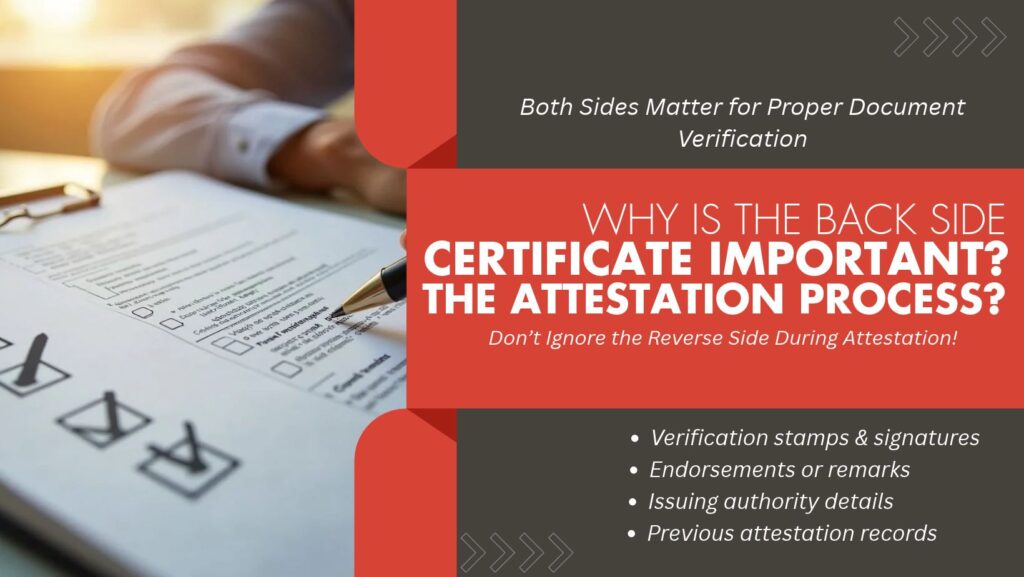
When preparing educational, personal, or professional documents for international use, most people focus on the information printed on the front of the certificate. However, the back side of a certificate can also contain important details that may be relevant during the attestation process. Stamps, signatures, verification remarks, registration information, or institutional endorsements may appear on the reverse side.
Understanding why both sides of a document matter can help applicants prepare their certificates correctly and ensure that the required verification and attestation procedures are completed smoothly.
What Can Be Found on the Back Side of a Certificate?
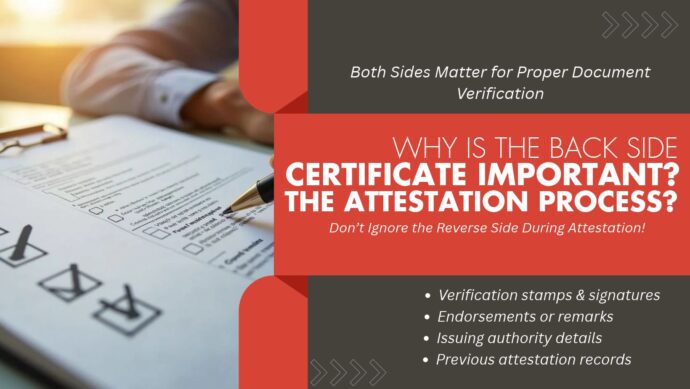
The reverse side of a certificate may contain information added by the issuing authority or another authorized department. Depending on the document type, it can include:
- Verification stamps or seals
- Authorized signatures
- Registration or reference numbers
- Institutional remarks
- Endorsements from educational authorities
- Previous verification details
- Additional certification information
- Instructions or document-related notes
These details can help establish the authenticity and history of a document. Therefore, applicants should not assume that only the front page needs attention.
Why Does the Reverse Side Matter During Attestation?
Certificate attestation generally involves checking the authenticity of a document through different authorities before it is accepted for an overseas purpose. The authorities involved may need to examine the complete document rather than just the information visible on the front.
If the back side contains a signature, seal, verification stamp, or other relevant information, it may form part of the document’s overall authentication. Providing both sides allows the concerned authority or service provider to understand the document completely.
This is particularly relevant when the reverse side contains information connected with the issuing university, educational board, government department, or other authorized institution.
Can a Certificate Be Submitted Without Checking Its Back Side?
Applicants should carefully inspect both sides before submitting a certificate for attestation. A certificate may look complete from the front, while important information is printed or stamped on the reverse.
For example, an educational certificate may contain an institutional stamp or verification endorsement on the back. Similarly, some documents may have additional authentication details that are not visible on the first page.
Checking both sides before submission helps applicants identify these details and provide the complete document wherever required.
How Does the Back Side Affect Document Verification?
Document verification is an important stage in many attestation procedures. The information on a certificate is examined to establish that the document was genuinely issued by the stated authority.
If the reverse side contains verification information, it may assist in understanding the document’s authenticity. In some cases, an authority may specifically require the complete document for processing.
The exact requirements can vary according to the certificate type, issuing authority, destination country, and purpose of document use. Therefore, applicants should confirm the current requirements before beginning the process.
What Should Applicants Check Before Submission?
Before submitting a certificate for attestation, applicants can inspect the document carefully from both sides. Important points to check include:
1. Stamps and Seals:
Look for official stamps, embossed seals, or institutional markings on the reverse.
2. Signatures:
Check whether an authorized person’s signature appears on the back.
3. Verification Details:
Look for reference numbers, verification remarks, or authentication information.
4. Physical Condition:
Make sure the document is clear and readable, including any information printed on the reverse.
5. Complete Scanning or Copying:
If digital copies are required for preliminary checking, both sides should be scanned clearly when the document contains relevant information on the back.
Why Professional Guidance Can Be Helpful
Attestation requirements can differ according to the destination country and document category. Educational certificates, birth certificates, marriage certificates, commercial documents, and other papers may follow different procedures.
A professional Certificate Attestation Agent In Delhi can help applicants understand the documentation requirements applicable to their particular certificate and destination. Similarly, individuals based in Maharashtra or using documents through Mumbai can consult a Certificate Attestation Agent In Mumbai for guidance on the appropriate procedure.
Professional assistance can be useful when a certificate contains additional information, stamps, or endorsements on the reverse side. It also helps applicants understand whether additional verification may be required before proceeding with attestation.
Is the Back Side Always Attested?
Not necessarily. Whether the reverse side requires separate attention depends on the document and the requirements of the concerned authorities. Some certificates have relevant information only on the front, while others contain important details on both sides.
For this reason, applicants should avoid making assumptions about which part of a document is required. The complete certificate should be reviewed before the attestation procedure begins.
Final Thoughts
The back side of a certificate can contain valuable authentication and verification information that contributes to the document’s overall identity. Stamps, signatures, endorsements, and reference details on the reverse may be relevant during document verification and attestation.
Before submitting a certificate for overseas use, always examine both sides carefully. Understanding the complete document and confirming the applicable requirements can make the attestation process more organized and straightforward.
Whether you are arranging documentation in Delhi or Mumbai, professional guidance can help you identify the appropriate requirements for your certificate and destination country. A careful review of the entire certificate is an important step toward preparing documents correctly for international use.