Why the Year You Graduated Can Matter During International Certificate Verification
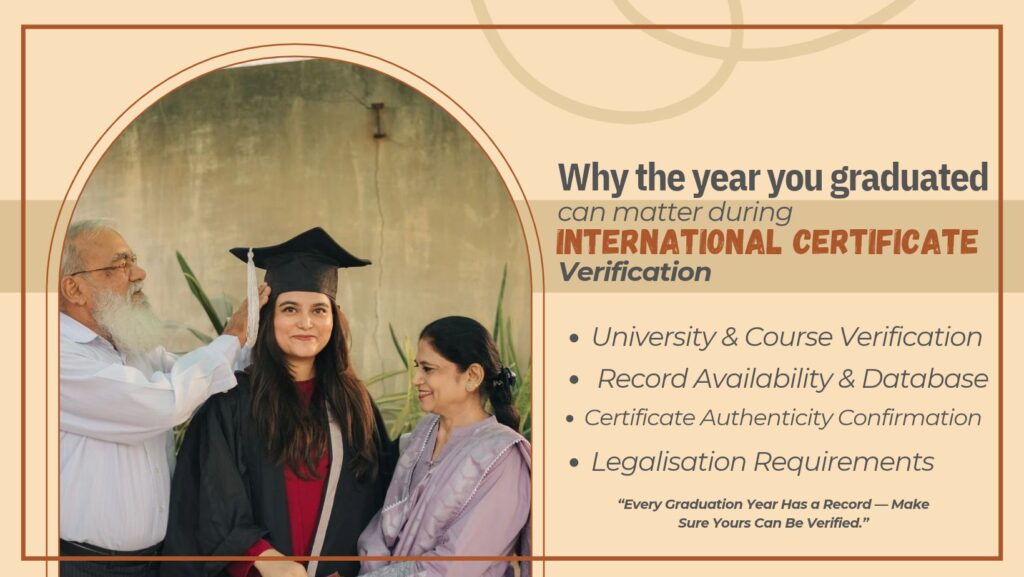
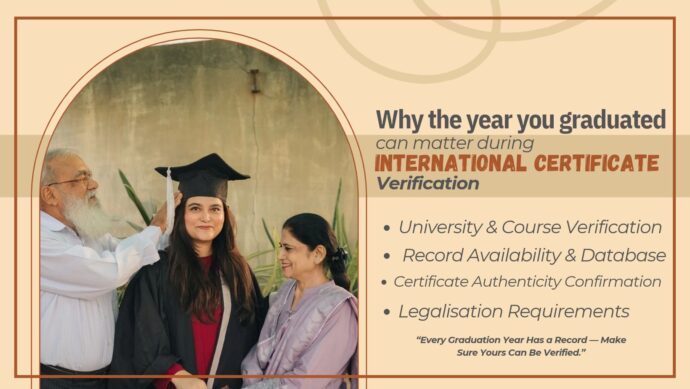
When people prepare educational documents for employment, higher studies, immigration, or professional registration abroad, they often focus on the certificate name, university, and marks. However, one detail that may also become important during international certificate verification is the year of graduation.
The graduation year helps authorities understand when a qualification was awarded and whether the information on the certificate matches the records maintained by the issuing institution. Even a genuine certificate may require additional verification when its details do not clearly match the information available in university or government records.
Why Is the Graduation Year Important?
A certificate is more than a piece of paper. It represents a qualification completed during a particular academic period. The year of graduation can help a foreign authority connect the document with the correct student record, course, examination session, and institution.
For example, a university may have different batches completing the same course every year. If an authority needs to verify a certificate, the graduation year can help identify the correct academic record.
It can also help distinguish between certificates issued under different regulations, university structures, or examination systems. This becomes particularly relevant when an institution has changed its course structure or administrative process over time.
Verification May Go Beyond Checking the Certificate
International document verification is not always limited to looking at the physical certificate. Depending on the destination country and purpose of the document, authorities may need confirmation from the educational institution or another designated authority.
During this process, details such as the student’s name, qualification, institution, registration information, and graduation year may be compared with available records.
If the information matches, the verification process can generally move forward according to the applicable procedure. If there is a difference, the authority may request clarification or additional documentation. This is one reason applicants should check their educational documents carefully before beginning the attestation process.
What If the Graduation Year Does Not Match?
Sometimes, applicants discover that the year mentioned on one document is different from the year shown on another academic record. This does not automatically mean that the certificate is invalid.
There can be legitimate reasons for differences. A student may have completed examinations in one year but received the final certificate later. Similarly, universities may record a completion year differently from the certificate issue date.
However, unexplained differences can create questions during verification. Authorities may need supporting documents to understand why the dates are different. Documents such as mark sheets, provisional certificates, degree certificates, transcripts, or university-issued letters may help establish the correct academic timeline, depending on the requirements of the destination country.
Why Older Qualifications May Need Extra Attention
Graduates with older qualifications may face a different verification situation compared with recent graduates. University records may have moved from physical archives to digital systems, institutions may have changed administrative structures, or verification procedures may have been updated.
In some cases, applicants may also have documents issued under an older format. The certificate can still be genuine, but the verification authority may need additional information to connect the older document with current institutional records.
This is why knowing your graduation year and keeping supporting academic documents safely can be useful when planning an international move.
How Professional Assistance Can Help
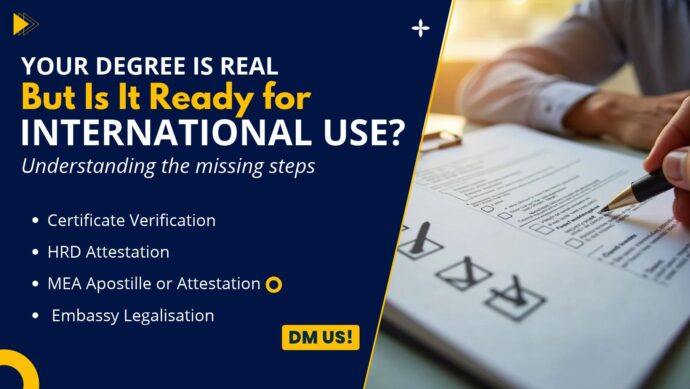
The attestation process can involve several stages, depending on the document type, destination country, and purpose. Applicants may need to understand whether their certificate requires university verification, state-level authentication, MEA-related processing, embassy or consular procedures, or another form of legalisation.
A professional service provider can help applicants understand the documentation requirements and identify possible issues before submission.
For people searching for a Certificate Attestation Agent In Delhi, Talent Overseas provides assistance with document attestation and related processes. The aim is to help applicants understand the requirements clearly and prepare their documents properly.
Similarly, applicants looking for a Certificate Attestation Agent In Bangalore can seek professional guidance when preparing educational certificates for use overseas. Proper preparation can reduce avoidable delays caused by incomplete documents or inconsistencies.
Check Your Documents Before Submission
Before submitting a certificate for international verification, review the graduation year carefully across all available academic documents. Check whether the year, name, qualification, university details, and other important information are consistent.
If you notice a difference, do not simply change or alter a document. Instead, find out why the difference exists and whether an official supporting document can explain it.
International verification is ultimately about establishing a reliable connection between your document and the academic record behind it. The graduation year is one of the details that can help authorities make that connection.
With proper preparation and professional guidance, applicants can approach the certificate attestation process with greater clarity. Talent Overseas helps individuals understand document requirements and prepare their educational certificates for the procedures applicable to their destination country.