How Do Attestation Requirements Differ for Documents Submitted From Delhi and Mumbai?
Document attestation is an important step for individuals who need to use Indian documents for employment, higher education, business, immigration, family sponsorship, or other official purposes abroad. While the basic objective of attestation remains the same, the process can differ depending on the document type, issuing authority, state of origin, and destination country.
Delhi and Mumbai are two major centres for document authentication services in India. Understanding how the process works in each city can help applicants prepare their documents correctly and choose the appropriate attestation route.
What Is Document Attestation?
Document attestation is the process of verifying the authenticity of a document through designated authorities. Depending on the purpose and destination country, documents may require verification by educational authorities, state departments, the Ministry of External Affairs (MEA), an embassy or consulate, and sometimes a foreign authority after arrival.
The exact procedure is not identical for every document. Educational certificates, personal documents, and commercial documents can follow different verification channels.
How Attestation Works in Delhi
Delhi is an important administrative centre for document authentication because several central government authorities and diplomatic missions are located in or around the National Capital Region.
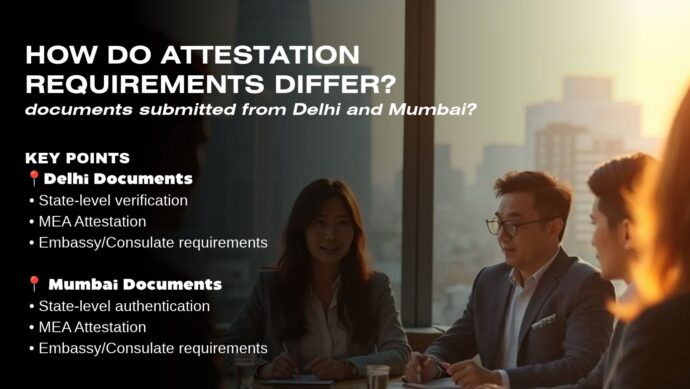
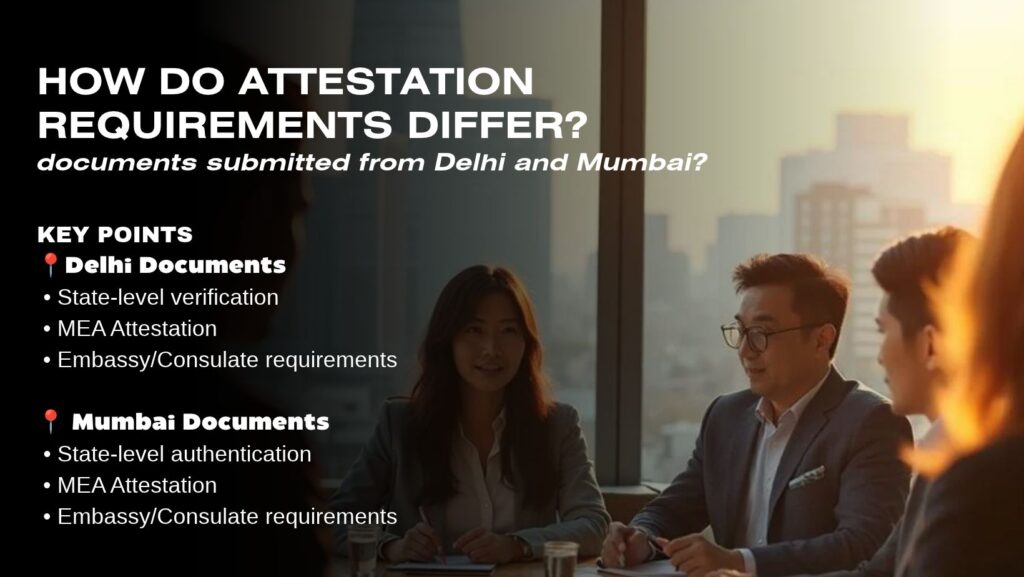
For applicants using Attestation Services In Delhi, the required process may depend on the issuing state and the type of document. Educational certificates can require verification from the relevant educational authority before proceeding to higher levels of authentication. Personal documents, such as birth or marriage certificates, may follow a different route based on their issuing authority.
After the appropriate preliminary verification, documents may proceed to MEA attestation or apostille, depending on the requirements of the destination country. If the destination country requires embassy legalization, the document may then need to be submitted to the concerned embassy or consulate.
Therefore, being physically located in Delhi does not automatically determine the complete attestation procedure. The origin and nature of the document remain important factors.
How Attestation Works in Mumbai
Mumbai is another major centre for document-related services, particularly for applicants based in Maharashtra and surrounding regions. The initial verification requirements can depend on where the document was issued.
When applicants use Attestation Services In Mumbai, they may be guided through the relevant state-level authentication process before the document moves to MEA or the appropriate foreign mission.
For example, an educational certificate issued by a Maharashtra institution may require verification through the applicable state or educational authority. A personal document may follow a separate authentication route based on the issuing department.
Mumbai also has several diplomatic missions and consular facilities, making it an important location for applicants whose destination country requires embassy or consular legalization.
Are Delhi and Mumbai Procedures Completely Different?
Not necessarily. The fundamental purpose of attestation is the same: to establish the authenticity of a document for official use. The major difference is often related to the document’s issuing authority and the authentication channel applicable to it. An applicant in Delhi may have a different preliminary verification requirement from someone submitting a document issued in Maharashtra.
For this reason, applicants should not assume that a procedure used for one city will automatically apply to another. The destination country also plays a major role in determining whether the final document requires apostille, embassy attestation, or another form of legalization.
Does the Document Type Matter?
Yes. Educational, personal, and commercial documents can have different procedures.
Educational certificates such as degree, diploma, and school certificates may require verification by the appropriate educational authority. Personal documents, including birth, marriage, and relationship certificates, can have different authentication requirements. Commercial documents may require authentication through relevant business or government authorities.
The destination country determines the final stage of legalization. Countries that recognize the Hague Apostille Convention may require an apostille, while other destinations can require embassy or consular attestation.
Why Is Correct Document Verification Important?
Following the correct authentication sequence helps ensure that the document is prepared according to the requirements applicable to its intended use. A document submitted through an unsuitable route may require additional processing or clarification.
Applicants should therefore confirm the issuing authority, document category, destination country, and intended purpose before beginning the process. Professional guidance can also help applicants understand which verification stages apply to their particular documents.
Choose the Appropriate Attestation Route
Delhi and Mumbai both provide access to important document authentication and legalization services, but the applicable procedure depends on more than the city where an applicant submits the document.
The document’s issuing state, issuing authority, document category, destination country, and purpose of use should all be considered before starting the process. Whether you are exploring Attestation Services In Delhi or Attestation Services In Mumbai, understanding these factors can make the documentation process more organized and efficient.
Talent Attestation assists applicants with document authentication requirements and helps them understand the applicable attestation or apostille procedure based on their documents and destination country. Proper preparation at the beginning can make the overall documentation journey clearer and more convenient.