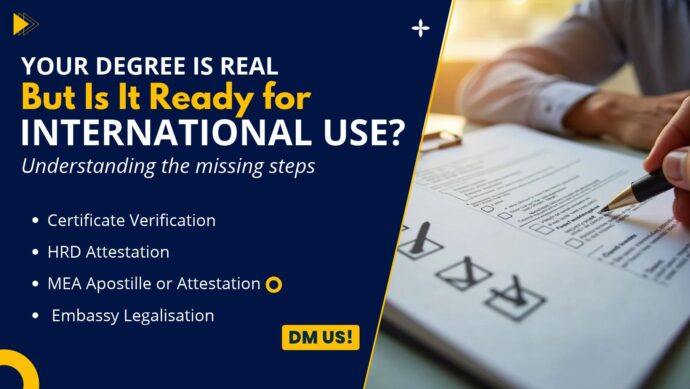
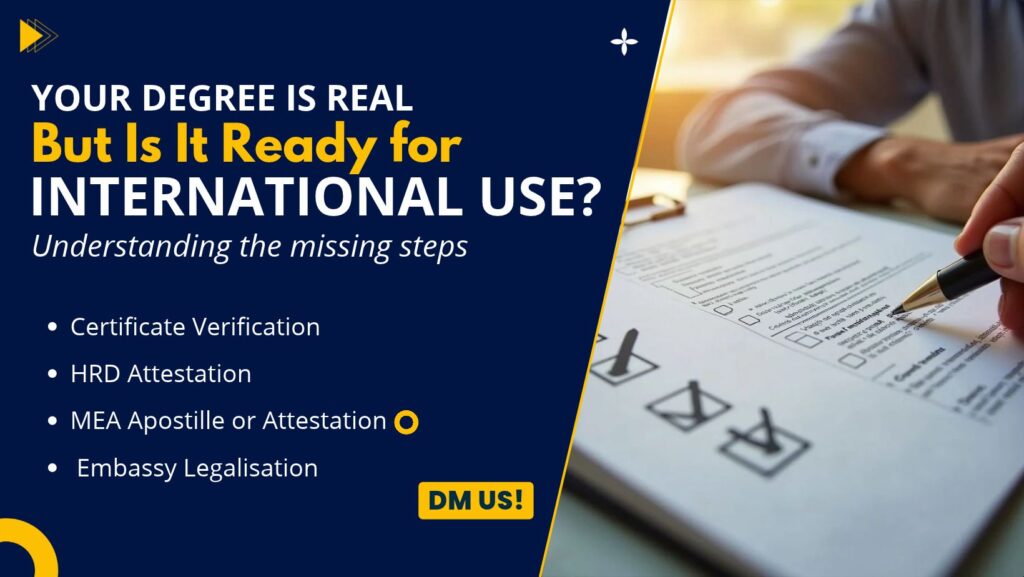
Your Degree Is Real, but Is It Ready for International Use? Understanding the Missing Steps
Having a genuine degree is an important achievement, but when you plan to use that degree in another country, simply having the original certificate may not always be enough. Foreign universities, employers, government departments, and immigration authorities may need additional proof that your educational document is authentic and has been issued by a recognised institution.
This is where document verification, authentication, attestation, and legalisation can become important. Understanding these steps before you travel or apply abroad can help you avoid unnecessary delays and documentation problems.
A Genuine Degree Does Not Always Mean Internationally Accepted
Your degree may be completely genuine and valid in India. However, a foreign authority may not automatically have a way to confirm its authenticity. Different countries follow different procedures for accepting educational documents issued overseas.
For example, an employer may want confirmation that your university actually issued the certificate. A foreign university may require verified academic documents before admitting you to a course. Government authorities may also require additional authentication before accepting your documents for official purposes. Therefore, there is a difference between having a genuine degree and having a degree prepared for official use abroad.
What Happens Before Your Degree Can Be Used Abroad?
The exact process depends on the document, issuing authority, destination country, and purpose of use. However, several common stages may be involved.
- University or Issuing Authority Verification
The first important question is whether the certificate can be connected to the records of the issuing university or educational institution. Authorities may verify details such as your name, course, registration information, year of completion, and certificate details.
If there is a mismatch between your documents and institutional records, additional clarification may be required.
- Authentication by the Relevant Authority
After verification, your document may need authentication from the appropriate government authority. This stage helps establish that the signature, seal, or issuing authority associated with the document is genuine.
The requirements can vary depending on where the certificate was issued and where it will be used.
- Attestation or Legalisation
The destination country may require further attestation or legalisation. Some countries follow embassy or consular legalisation procedures, while documents used in countries participating in the Hague Apostille Convention may follow an apostille process instead. This is why checking the destination country’s current requirements is essential before submitting your documents
Why Are These Steps Necessary?
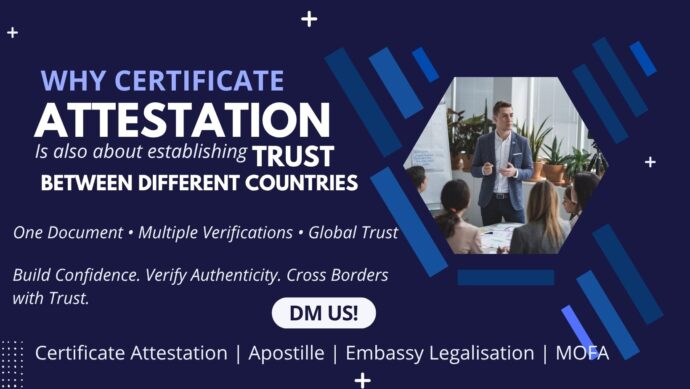
International document procedures exist because authorities in one country cannot always directly verify every educational institution or government document from another country. Authentication creates a chain of trust between the document’s original source and the authority receiving it.
For example, a foreign employer may not know your university personally. An authentication process can provide supporting confirmation that the certificate originated from a legitimate source and has passed the required verification stages.
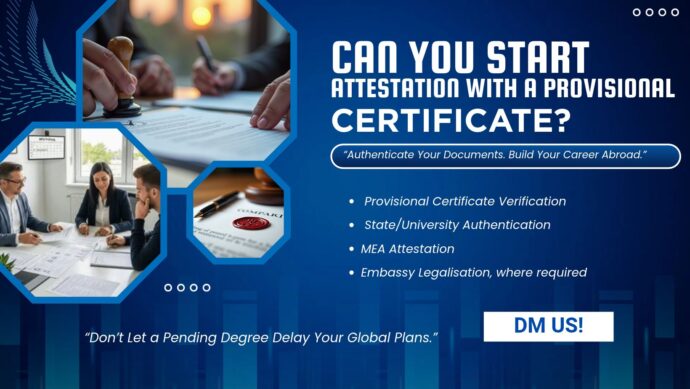
However, attestation does not itself guarantee employment, admission, immigration approval, or professional licensing. The receiving organisation may have additional eligibility requirements.
Common Problems That Can Delay the Process
Applicants sometimes face delays because they begin the process without checking document requirements carefully. Common issues include differences in names across documents, damaged certificates, missing supporting documents, unclear university records, incorrect seals, or selecting the wrong authentication procedure.
Another common issue is assuming that the same process applies to every country. Requirements can differ based on the destination, purpose, and type of certificate. Getting the correct information before submission can therefore save time and prevent repeated processing.
How an Attestation Professional Can Help
If you are unfamiliar with international document procedures, working with a professional service provider can make the process easier to understand.
A reliable Certificate Attestation Agency In Mumbai can help applicants identify the documents and procedural stages that may apply to their particular destination and purpose. Professional guidance can also help reduce avoidable errors during submission.
Similarly, a Certificate Attestation Agent In Mumbai can assist with coordinating document processing and explaining the requirements involved. Applicants should still verify the final requirements with the relevant embassy, government authority, university, employer, or other receiving organisation.
Prepare Your Degree Before You Need It
If you are planning to study, work, migrate, or complete another official process abroad, do not wait until the last moment to prepare your educational documents.
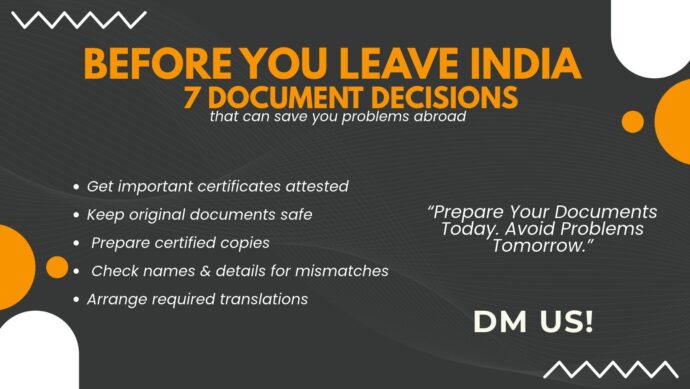
Start by checking whether your degree requires verification, authentication, apostille, attestation, or legalisation. Confirm the destination country’s requirements and make sure your personal details are consistent across all documents.
At Talent Overseas, applicants can receive professional guidance for certificate attestation and related document procedures. The goal is to help you understand the process clearly and prepare your documents according to the requirements applicable to their intended use.
Conclusion
A genuine degree is the foundation, but international use may require additional steps before a foreign authority can accept it. Verification, authentication, attestation, apostille, or legalisation may form part of the journey depending on the destination and purpose.
Understanding these requirements early can help you prepare your documents correctly and avoid unnecessary delays. With the right information and professional assistance, your educational certificate can be better prepared for the international d