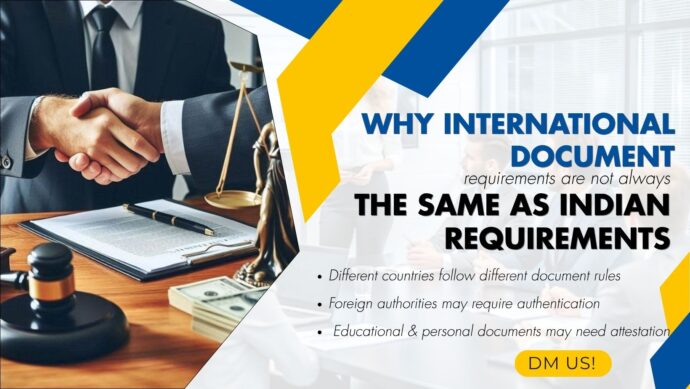
Why International Document Requirements Are Not Always the Same as Indian Requirements
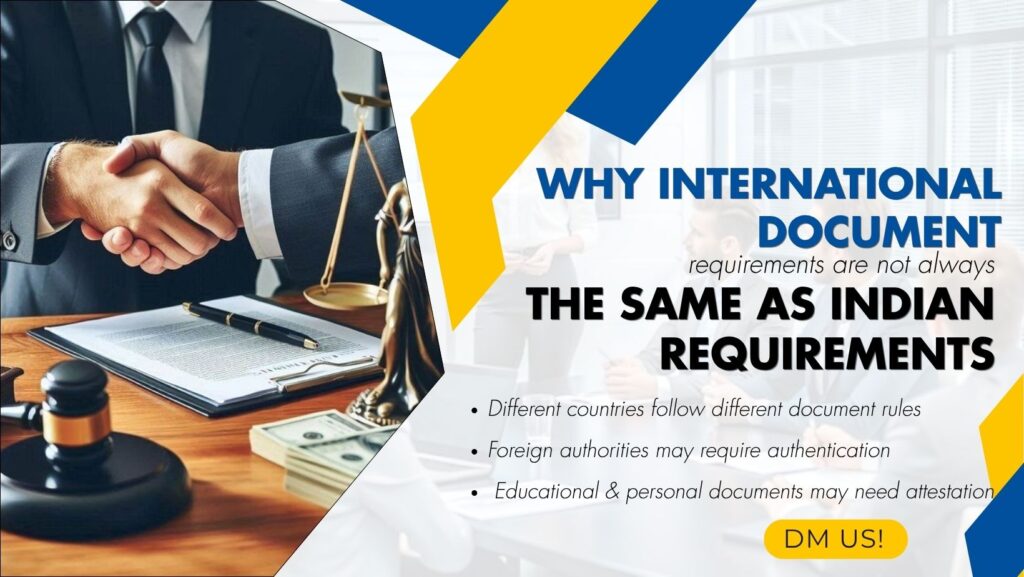
When planning to work, study, settle, or start a business abroad, many people assume that their Indian documents will be accepted in the same form they are issued in India. However, international documentation often follows different rules. A certificate that is perfectly valid for an Indian purpose may still need verification, attestation, apostille, translation, or legalization before it can be accepted by a foreign authority.
Understanding this difference can help applicants avoid unnecessary delays and prepare their documents correctly. Talent Overseas helps individuals understand the documentation requirements involved when their Indian certificates need to be used internationally.
Why Foreign Authorities Follow Different Document Rules
Every country has its own legal and administrative system. Government departments, universities, employers, immigration offices, and other institutions may have specific requirements for documents issued outside their country.
For example, an Indian educational certificate may prove that a person has completed a particular course. However, a foreign authority may also need confirmation that the certificate is genuine and was issued by a recognized institution.
This is where document verification and authentication become important. The purpose is not usually to change the information on a document but to establish its authenticity for use in another country.
A Valid Indian Certificate May Need Additional Verification
A certificate issued by an Indian university or government authority is generally valid within the Indian system. But when the same certificate crosses international borders, additional procedures may apply.
Depending on the destination country and purpose, an applicant may need:
- Verification from the issuing authority
- State-level authentication
- Ministry of External Affairs (MEA) attestation
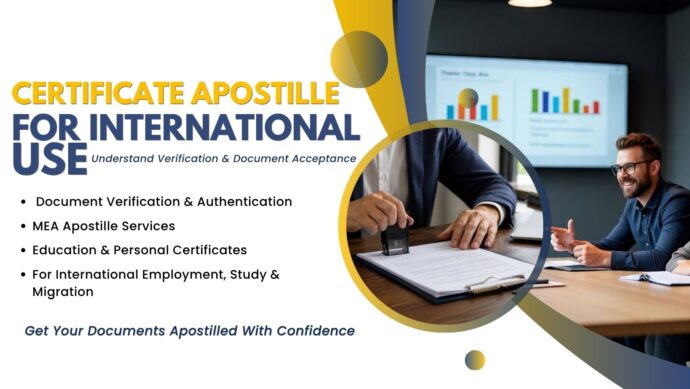
- Apostille
- Embassy or consulate legalization
- Certified translation
- Additional verification requested by the receiving institution
The exact requirement depends on where the document is going and why it is being submitted. Therefore, applicants should not assume that one standard procedure works for every country.
Different Countries Can Have Different Acceptance Standards
One of the most important things people often overlook is that document requirements can vary from one destination country to another.
For example, a document being prepared for employment may follow a different process from one being submitted for higher education. Similarly, a document required for immigration may have additional conditions.
This is why people searching for Certificate Attestation in Hyderabad should first understand the destination country’s requirements instead of simply asking for a standard attestation process. The correct procedure depends on the type of certificate, issuing authority, destination country, and intended use.
Translation Can Also Become an International Requirement
Language is another major difference between domestic and international document use. A certificate issued in English may be accepted directly by some foreign institutions, while another authority may require translation into its official language. In some cases, the translation may need to be certified or completed by an authorized translator.
Applicants should therefore check whether translation is required before submitting their documents. Completing translation at the wrong stage can sometimes create additional work or delays.
The Purpose of the Document Matters
The same certificate can be used for completely different purposes. A degree certificate, for instance, could be submitted to a university for further education, an employer for a job, or an immigration authority as part of a visa application.
Each organization may have different expectations. This means applicants should identify the purpose of document submission before beginning the authentication process. Preparing documents without knowing the final requirement can result in unnecessary procedures or missing steps.
Why Document Preparation Should Start Early
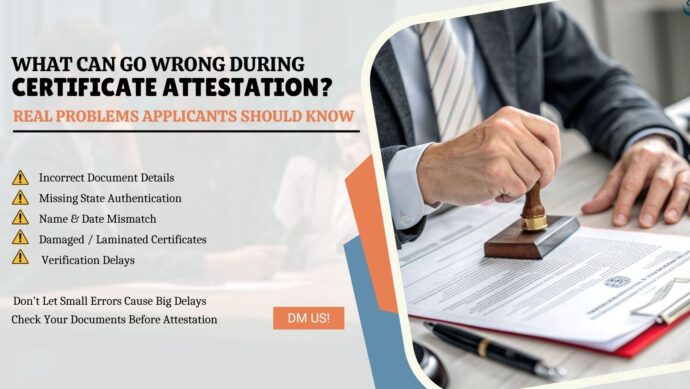
International documentation can involve multiple authorities, particularly when verification is required before attestation or legalization. If a document contains incorrect information, damaged pages, mismatched names, or incomplete details, the issue may need to be resolved before processing continues.
Starting early gives applicants enough time to check:
- Name and date details
- Certificate condition
- Issuing authority information
- Supporting documents
- Verification requirements
- Destination-country rules
- Translation requirements
- Final submission format
A careful document check can make the overall process more organized.
How Professional Assistance Can Help
Understanding international documentation rules can be confusing, particularly for someone handling the process for the first time. Requirements may also change according to the destination country and the purpose of submission.
Professional service providers such as Talent Overseas can help applicants understand the documentation process and organize their certificates according to the applicable requirements. Proper guidance can reduce confusion and help applicants avoid common preparation mistakes.
For individuals preparing documents in Karnataka, understanding the process before submitting certificates can also make the search for Certificate Attestation in Bangalore more meaningful. Instead of treating attestation as a single fixed service, applicants can approach it based on their actual international requirement.
Final Thoughts
Indian documents do not automatically follow the same acceptance rules when they are used overseas. Foreign authorities may require additional authentication, legalization, apostille, translation, or verification depending on the country and purpose.
The most important step is to identify the final requirement before starting the process. By checking destination-country rules, preparing supporting documents, and getting professional guidance where necessary, applicants can make international document preparation more structured and less stressful.
Talent Overseas supports applicants in understanding the documentation journey and preparing their certificates for international use with greater clarity and confidence.