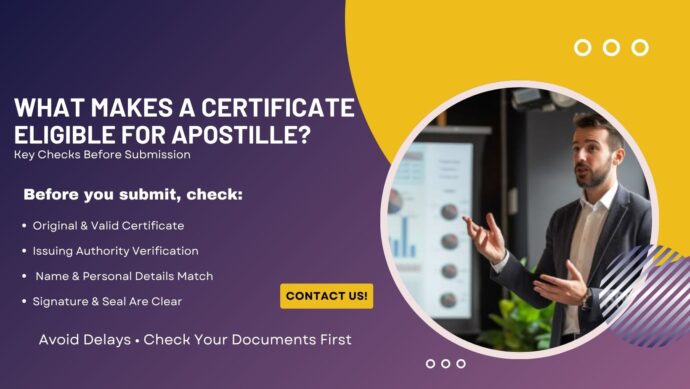
What Makes a Certificate Eligible for Apostille? Key Checks Before Submission
When a certificate needs to be used in another country, apostille is often an important part of document authentication. However, not every document can be submitted for an apostille immediately. The certificate must meet certain requirements before it can move through the authentication process.
Understanding these requirements can help applicants prepare their documents correctly, avoid unnecessary delays, and ensure that the certificate is suitable for its intended purpose. For individuals planning education, employment, marriage, business, or relocation abroad, knowing the basic eligibility checks is especially useful.
1. Check Whether the Destination Country Accepts Apostille
The first step is to identify the document’s destination. Apostille procedures are relevant when the document is being presented in a country covered by the Hague Apostille Convention. This makes destination-country verification an important eligibility check. Some authorities may also request additional formalities depending on the purpose of the document.
For example, a university may have specific requirements for an educational certificate, while an immigration authority could request additional supporting documents. Therefore, applicants should always check the requirements of the organization receiving the certificate. For those planning Certificate Apostille in Delhi, confirming the destination country’s requirements before submission can help establish the correct authentication route.
2. Verify the Type of Certificate
The nature of the document matters. Educational certificates, birth certificates, marriage certificates, commercial documents, and other public documents may follow different authentication routes.
Applicants should identify exactly what document is required before submitting it. A degree certificate, for instance, may require verification through the appropriate educational authority before it can proceed further. Similarly, personal documents can have their own authentication requirements. Understanding the document category helps determine the appropriate procedure.
3. Ensure the Certificate Is Genuine and Legible
The certificate should be an authentic document issued by the appropriate authority. Important details such as the holder’s name, date, certificate number, signatures, seals, and other relevant information should be clearly visible.
Documents with unclear printing, damaged portions, missing information, or discrepancies may require clarification before processing. Applicants should carefully compare their certificate with their passport and other supporting documents. Even a small difference in spelling or personal details can create questions during document verification.
4. Check the Required State-Level Verification
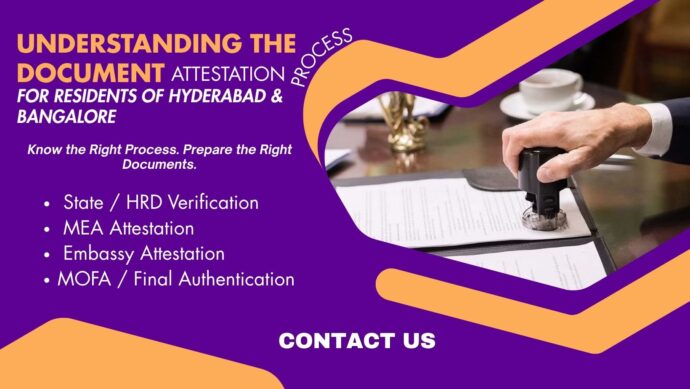
Indian documents can involve preliminary verification before they reach the central apostille stage. The exact requirement can depend on the document category and issuing authority.
Educational certificates, for example, may require verification from the appropriate educational authority. Personal documents can follow a different route. This is why applicants should not assume that every certificate follows the same process. Identifying the correct preliminary authentication route is one of the most important steps before submission.
5. Confirm Personal Details
Names and other personal information should be consistent across relevant documents. Applicants should check their full name, date of birth, parent’s name where applicable, and other identifying information.
If the certificate contains information that differs from the applicant’s passport or other documents, it is better to clarify the discrepancy before beginning the apostille procedure. This simple check can help create a smoother documentation process and reduce the need for corrections later.
6. Check Whether Translation Is Required
The receiving organization or destination country may require the certificate to be translated into a particular language. Translation requirements can vary according to the purpose of the document and the authority receiving it.
Applicants should determine whether the original certificate, an apostilled certificate, a translated version, or a combination of these documents is required. Translation should therefore be considered as part of the overall document preparation rather than as an afterthought.
7. Understand the Purpose of the Certificate
Apostille requirements can also depend on why the document is being used abroad. Certificates submitted for higher education may have different supporting requirements from those used for employment, immigration, marriage registration, or business purposes.
Before submission, applicants should identify the receiving authority and understand exactly what it expects. This provides clarity about the documents, verification, translation, and authentication steps that may be required.
Preparing Your Certificate With Talent Attestation
Proper preparation is an important part of the apostille process. Talent Attestation assists applicants with document authentication requirements and helps them understand the appropriate process based on their document type and destination.
From educational certificates to personal documents, applicants can review their documentation requirements before proceeding. Professional guidance can also help identify whether preliminary verification or additional formalities may apply.
For applicants searching for Certificate Apostille in Delhi, checking eligibility before submission is an important first step. Instead of treating apostille as a simple stamp, applicants should consider the complete authentication chain and the requirements of the receiving authority.
Final Checklist Before Submission
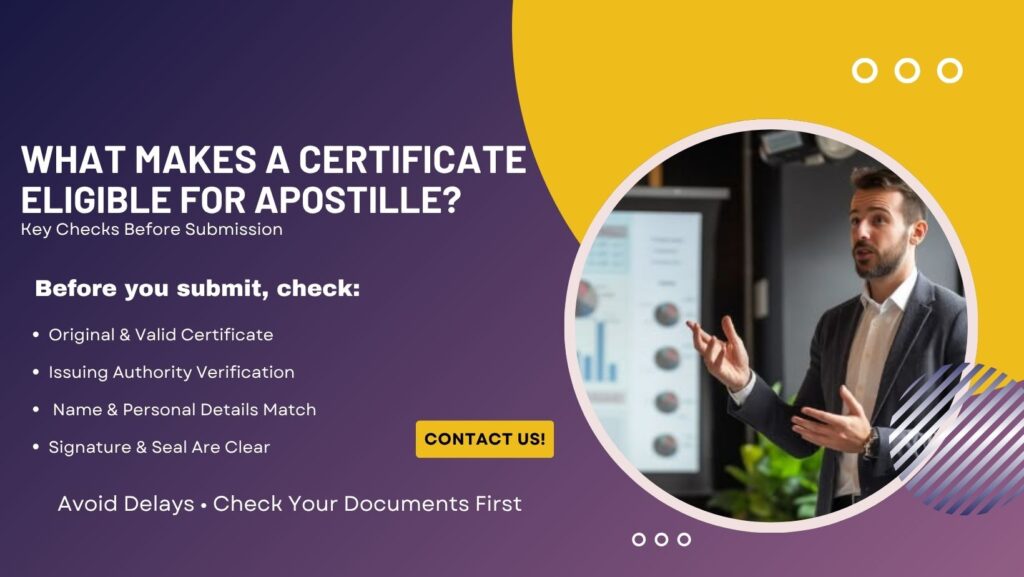
Before submitting a certificate for apostille, applicants should check:
- Whether the destination country accepts apostilled documents
- Whether the certificate category is eligible
- Whether preliminary verification is required
- Whether the original certificate is genuine and readable
- Whether names and personal details match supporting documents
- Whether translation is required
- Whether the receiving authority has additional requirements
- Whether all supporting documents are prepared correctly
Apostille preparation becomes much easier when these checks are completed in advance. Taking time to understand the document category, destination-country requirements, verification route, and receiving authority’s expectations can help applicants prepare their certificates more efficiently. With the right documentation and professional assistance from Talent Attestation, applicants can approach the apostille process with greater clarity and confidence.