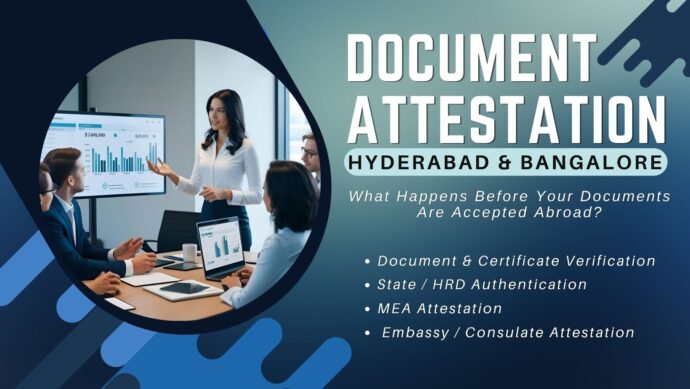
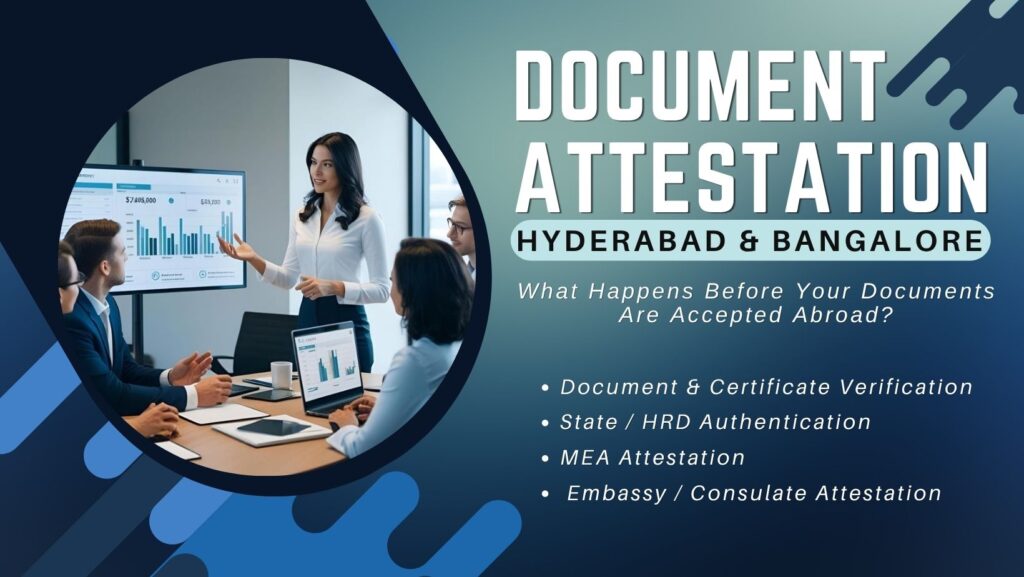
Document Attestation in Hyderabad & Bangalore: What Happens Before Your Documents Are Accepted Abroad?
Moving abroad for employment, higher education, business, family relocation, or other professional purposes often requires more than simply carrying original certificates. Foreign authorities need confidence that the documents submitted to them are genuine and issued by recognised institutions or government authorities. This is where document attestation becomes an important part of the international documentation process.
Many applicants begin the process only when an overseas employer, university, immigration authority, or government department requests verified documents. However, several checks can happen before a document receives the required authentication. Understanding these stages can help applicants avoid delays and prepare their paperwork correctly.
Why Documents Need Verification Before Overseas Use
A document issued in India may not automatically have legal acceptance in another country. Foreign authorities need a reliable way to verify its origin and authenticity. Attestation provides an official chain of authentication that allows the receiving authority to trust the document.
The exact procedure can vary according to the document type, destination country, and purpose of submission. Educational certificates, personal documents, commercial papers, and other records may follow different verification requirements.
Before beginning the process, applicants should identify:
- The purpose for which the document will be used
- The destination country
- The type of document requiring authentication
- Whether state-level or central verification is required
- Whether embassy or consular legalisation is necessary
- Whether additional translation or verification is required
This preparation can prevent applicants from following an unsuitable procedure.
What Happens Before the Final Attestation?
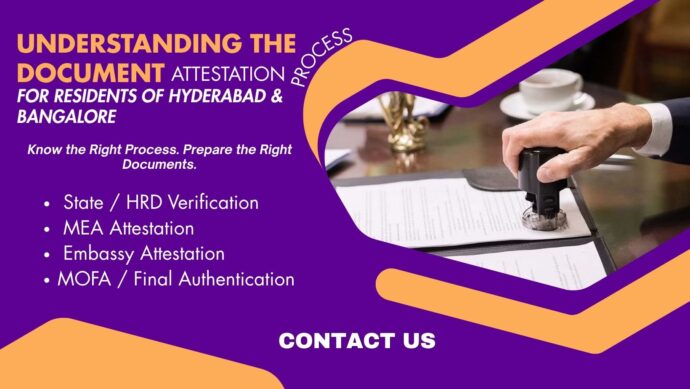
Document authentication is generally not a single-step activity. Several stages may take place before the document reaches the final authority.
1. Checking the Original Document
The first step is usually to examine the document for accuracy and completeness. Names, dates, registration details, seals, signatures, and other information may need to match supporting records.
Any discrepancy can create complications later. Applicants should therefore check their documents carefully before submitting them for verification.
2. Verification by the Relevant Authority
Depending on the document, verification may be required from the authority that originally issued or controls the record. For educational certificates, this can involve verification through the relevant educational institution or authority.
This stage is important because later authentication is generally based on the authenticity of the underlying document.
3. State or Department-Level Authentication
Certain documents may require authentication at the appropriate state or departmental level before they can move forward in the process.
For applicants using Document Attestation in Hyderabad, understanding the applicable authority for their particular document can make the preparation process more organised. The requirements may differ depending on whether the document is educational, personal, or commercial.
4. Central-Level Authentication
In cases where central authentication is required, the document may proceed through the appropriate national authority. This stage helps establish that the document has passed the required verification before it is presented to an overseas mission or authority.
Applicants should not assume that every document follows the same sequence. Requirements can depend on the destination country’s rules and the nature of the document.
Embassy or Consular Legalisation
After the necessary Indian-side verification is completed, the document may need authentication by the embassy or consulate of the destination country.
This stage connects the Indian authentication process with the requirements of the country where the document will be used. The receiving country may check whether the document carries the required authentication marks and whether it meets its submission standards.
For applicants seeking Document Attestation in Bangalore, understanding the destination country’s requirements before submission can be particularly useful. A document prepared correctly for one country may not necessarily meet the requirements of another.
Why Small Errors Can Cause Delays
One of the less obvious challenges in document authentication is that a seemingly minor inconsistency can interrupt the process. Differences in names, incomplete documents, unclear copies, missing signatures, incorrect formats, or unsuitable supporting papers may result in additional verification.
Applicants should therefore review every document before submission rather than assuming that an original certificate automatically meets international requirements.
How Professional Assistance Can Help
The documentation process can involve multiple authorities, procedures, and destination-specific requirements. Professional assistance can help applicants understand the sequence, organise paperwork, identify missing documents, and reduce avoidable errors.
Talent Overseas assists applicants with document-related processes by helping them understand the requirements associated with overseas document use. Proper guidance can be especially useful when applicants are unfamiliar with authentication procedures or are managing documentation for employment, education, business, or relocation.
Preparing for a Smoother International Documentation Process
Successful document authentication starts with preparation. Applicants should confirm the destination country’s current requirements, keep original documents and supporting records ready, verify personal details carefully, and understand whether translation, apostille, embassy legalisation, or additional verification is applicable.
The important point is that acceptance abroad usually happens only after the document has passed the required verification chain. Understanding what happens before the final authentication allows applicants to plan better and avoid unnecessary complications.
With proper preparation and professional guidance from Talent Overseas, individuals can approach the international document process with greater clarity and ensure that their paperwork is prepared according to the requirements of its intended destination.