Can One Attested Certificate Be Used for Multiple Countries? What You Should Know
When planning to work, study, settle, or apply for a family visa abroad, document attestation is an important part of the preparation process. Many applicants wonder whether a certificate attested for one country can also be submitted in another country. The answer depends on the destination country’s requirements, the type of certificate, and the authentication or legalisation procedure followed.
Understanding these requirements before submitting your documents can help you prepare the right paperwork and choose the appropriate attestation process.
What Does Certificate Attestation Mean?
Certificate attestation is the process of verifying the authenticity of a document so that it can be accepted by authorities, institutions, employers, universities, or immigration departments in another country.
Depending on the destination and document type, the process may involve verification by relevant state authorities, the Ministry of External Affairs, an embassy or consulate, and sometimes the foreign country’s Ministry of Foreign Affairs.
The purpose is to establish that the certificate is genuine and has been issued by a recognised authority.
Can One Attested Certificate Be Used for Different Countries?
Generally, an attested certificate is not automatically valid for every country. Attestation is usually connected to the requirements of the country where the document will be submitted.
For example, a certificate processed for employment in one Gulf country may require a specific embassy attestation followed by procedures in that destination country. Another country may follow a different authentication, legalisation, or apostille system.
Therefore, even when the same original certificate is being used, the required authentication procedure can vary according to the destination.
Why Do Countries Have Different Requirements?
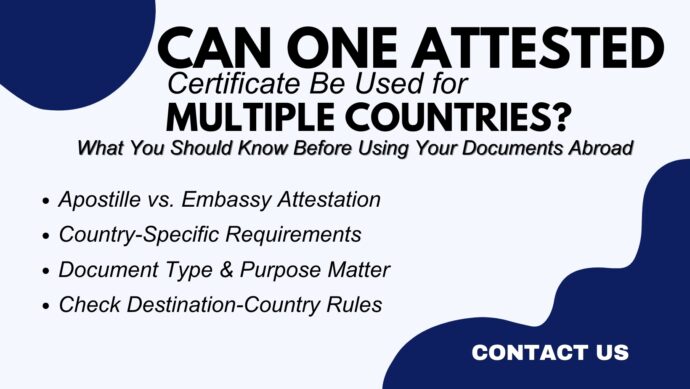
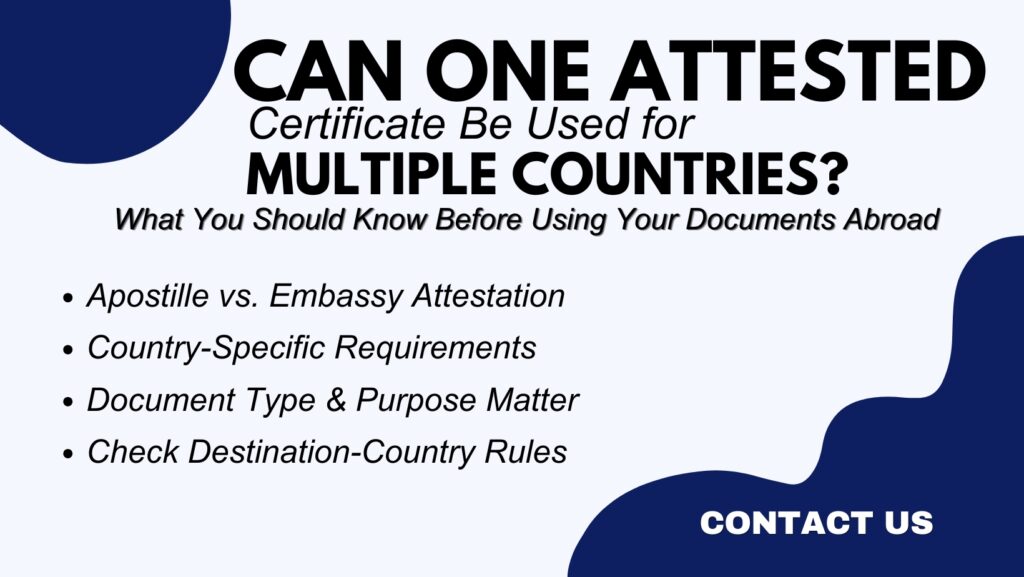
Every country establishes its own rules for accepting foreign documents. Some countries may accept an apostille under the Hague Apostille Convention, while others may require embassy or consular legalisation.
Requirements can also vary according to the purpose of the document. A degree certificate submitted for employment may have different requirements from a marriage certificate submitted for a family visa.
Before starting the process, applicants should check:
- Destination country
- Purpose of document submission
- Type of certificate
- Issuing authority
- Required government verification
- Embassy or consulate requirements
- Final authority where the document will be submitted
This preparation helps ensure that the certificate follows the correct procedure.
Does Reusing an Attested Certificate Save Time?
If you already have an attested certificate, you should not assume that it can simply be submitted to another country’s authorities. The previous attestation may still prove useful as part of your document history, but the new destination may require additional authentication or a different form of legalisation.
For instance, a certificate prepared for one country may require embassy-specific verification, whereas another destination may ask for an apostille. In such cases, the same document may need to go through a different process before it becomes acceptable.
This is why checking destination-specific requirements before submission is important.
What About Multiple Countries in the Same Application?
People who are considering opportunities in multiple countries may have several destinations in mind at the same time. In this situation, it is better to identify the document requirements for each country separately.
You may be able to use the same original certificate for different applications, but the authentication attached to it may not satisfy every country’s requirements.
Professional guidance can make this process easier. Applicants looking for Attestation Services In Hyderabad can consult an experienced service provider to understand the applicable procedure based on their destination and document type.
Should You Get Separate Attestation for Each Country?
There is no universal rule that every country requires a completely new certificate. However, the authentication or legalisation requirements should always be checked individually.
The important distinction is between the certificate itself and the authentication procedure. Your degree, birth certificate, marriage certificate, or other document remains the same, but the destination country’s authorities may require a particular authentication format.
Getting the requirements confirmed in advance can help you avoid unnecessary processing and prepare your documents correctly.
How Talent Attestation Can Help
Talent Attestation provides professional assistance for individuals preparing certificates for international use. The team can help applicants understand the general documentation and authentication requirements based on the destination country and purpose of submission.
If you are based in Bangalore and preparing documents for overseas employment, education, immigration, or family-related purposes, exploring Attestation Services In Bangalore can help you understand the appropriate process before submitting your original certificates.
A well-planned attestation process starts with identifying the destination, document type, and intended purpose. Talent Attestation focuses on providing professional assistance and timely and reliable service to help applicants prepare their documents efficiently.
Final Thoughts
One attested certificate should not automatically be considered valid for multiple countries. Each destination can have its own rules regarding authentication, attestation, apostille, or legalisation.
Before reusing an attested certificate, always confirm the current requirements of the country where you plan to submit it. Checking these details early can help you choose the correct process and ensure that your documents are prepared according to the destination country’s expectations.
With proper preparation and professional assistance from Talent Attestation, applicants can approach their international documentation requirements with greater clarity and confidence.